
Is your body telling you it's time to move differently?
HealthFit is our personalised exercise and health education programme — designed to help you move with confidence, reduce aches and pains, improve strength and balance, and understand your body better. Whether you are recovering from an injury or simply want to stay healthy and active.
Move better. Understand your body. Stay healthier for longer.

Could HealthFit help you?
Answer a few simple questions to see whether HealthFit could be right for you. Nothing is sent to us. This is yours to read.
Tick anything that sounds like you. Your HealthFit Check builds as you go.
Your HealthFit Check
- Mobility
- Strength
- Balance
- Confidence to exercise
- Pain & movement
- Injury recovery
- Healthy ageing
HealthFit is built to develop exactly these — through personalised exercise, practical education, and ongoing guidance from practitioners who get to know you and your goals.
- What it costs
- Fees are not published on the current site: the page titled "Timetables & Prices" contains no price. They are confirmed when you book.
- When it runs
- The current site publishes two different class timetables. Until the practice confirms one, this page tells you to call rather than guessing on your behalf.
- How everyone starts
- A 45-minute one-to-one assessment. Not a trial class.
HealthFit is different because we don't just tell you what exercises to do
Every session is an opportunity to learn more about your body while improving your fitness. We help you understand:
What you will understand
- why your body moves the way it does
- how to exercise safely
- how to manage aches, pains and injuries
- how to prevent future problems
- how strength, mobility and balance affect everyday life
- how to build healthy habits that last
Only two practitioners. Every participant is known personally.
- We know your goals
- Not a form you filled in once: the person teaching you remembers what you came in for.
- We know your injuries
- And what you should not be doing this week, without you having to remind anyone.
- We notice when something changes
- Because the same person watches you move, every session.
- Your programme evolves with you
- It is adjusted as you improve, not reissued every twelve weeks.
That creates trust, which matters most to the people who are nervous about exercising in the first place.
If you were told you do not need treatment
This is not the consolation prize. Being told you do not need treatment means the problem does not need a therapist's hands on it. It does not mean nothing caused it. The strength work is what changes the cause, and it is the thing most people should have been doing before they needed us at all.
Book the 45-minute assessment
The one-to-one where your program gets worked out. Call and Christine will find a time.
Three ways it runs
Which of the three you end up in is settled at the assessment, with the instructor, not chosen off this page.
One-to-one with an instructor. Where everyone starts, and where some people stay — if your problem needs watching closely, or classes do not suit you.
Small supervised classes once your technique is established. Capped numbers, pre-booked, and the instructor is watching the room rather than leading from the front.
The same supervised session from home or from your desk. For people who cannot get into the city reliably, are travelling, or are working from home that week.
Everyone starts with a 45-minute one-to-one
Not a trial class. A 45-minute individual assessment with an instructor, where your programme is worked out and the technique is taught properly before you are in a room with anyone else. All new clients complete this. Some people need more than one before moving into classes, and that is ordinary.
The first eight weeks, and who is in the room
- Weeks 1–2Learning the movements properly. This is slower than you will expect, and it is the part that makes the rest work.
- Weeks 3–4The programme starts to load. Most people notice they are steadier before they notice they are stronger.
- Weeks 5–6Technique stops needing constant correction, and the session gets harder because it can.
- Weeks 7–8The point of it: the thing that hurt is being loaded on purpose, safely, and holding up.
Mostly people between 35 and 70 who came in with a problem rather than a fitness goal. Office workers with necks and lower backs, people rehabilitating after surgery, and people who were told to "keep active" and wanted that to mean something specific. Roughly even between men and women.
Christine Jenkins
Runs HealthFit. Builds the strength that stops the same problem coming back.
- Physiotherapy-led exercise
- The class is designed around what your assessment found, not around a generic program everyone in the room is doing.
- Teaches, then keeps explaining
- Asks why you need help, watches how you move, corrects, and tells you what she is correcting and why.
- Small groups only
- Caps the room so every person is watched, which is the difference between a supervised session and a gym.
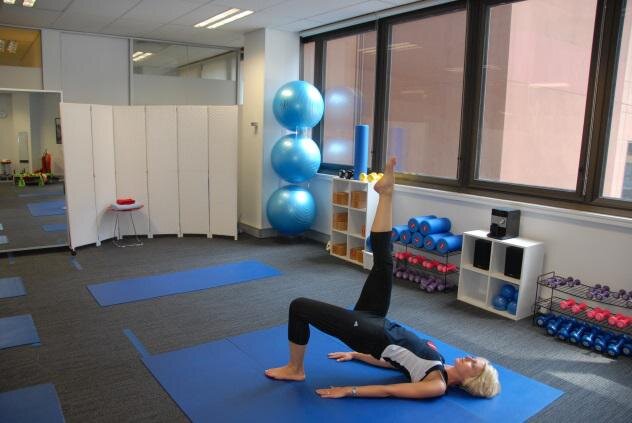
Ready when you are
Book the 45-minute assessment.
state · no-times-soonWhere nothing on the timetable works, say so and Christine will find a time — including online.